
The house on the corner is quiet, dark, and maybe even a little smoky. The owner forgot one of the core rules of winter homeownership: Your furnace doesn’t break down on a beautiful Tuesday afternoon. It breaks down at 2:00 a.m. on the coldest holiday weekend of the year.
Being “that neighbor”—the one frantically calling an HVAC company for a $500 emergency fix—is avoidable. Your heater always gives warning signs. You just have to know what to listen for.
Here are the critical emergency warnings you should never ignore, followed by the simple maintenance steps that keep the repair technician away.
🛑 The Emergency Red Flags: Call a Professional Immediately
These seven signs move beyond “annoying issue” and into “safety risk” or “system-damaging emergency.” If you notice any of these, shut your system off and call for professional service right away.
1. The Carbon Monoxide (CO) Detector Goes Off
This is the ultimate red flag. CO is an odorless, colorless gas that is highly toxic. A malfunctioning furnace, particularly one with a cracked heat exchanger, can leak CO into your home.
⚠️ Your Action: Leave your home immediately. Call the fire department and your HVAC provider from a safe location. Do not re-enter until the home has been cleared.
2. The Pilot Light is Yellow or Orange
If you have an older gas furnace, the pilot light flame should be crisp, steady, and blue. A yellow or orange flame indicates improper combustion, which can signal a dangerous build-up of soot or the production of carbon monoxide.
3. Loud, Abnormal Noises
Furnaces make some noise, but they shouldn’t sound like a battle is raging in your basement.
Loud Banging/Booming: This is often delayed ignition, where gas builds up before lighting, causing a small, disruptive explosion.
Screeching/Squealing: This typically means a bad belt or worn-out motor bearings. If ignored, the motor will seize, requiring a much costlier replacement.
Grinding/Scraping: This is often metal-on-metal—a sign that a component (like the blower wheel) is loose and rubbing against the casing. Turn it off!
4. You Smell Gas or Burning Plastic/Rubber
A faint burning smell when you first fire up your furnace for the season is usually just dust burning off. If the smell persists or changes to:
Rotten Eggs: This is the sulfur additive used to signal a natural gas leak. Evacuate and call your utility company immediately.
Burning Plastic/Wire: This indicates an electrical problem, which is a significant fire hazard.
5. Water or Puddles Around the Unit
Any time you see water leaking near your furnace, it’s a sign of a problem. In modern, high-efficiency (condensing) furnaces, it could be a clogged condensate drain. In older models, it could signal a severe problem with the combustion area or humidifier. Water pooling can lead to rust, electrical shorts, and mold growth.
6. The Furnace is “Short-Cycling”
Does your furnace turn on, run for a couple of minutes, shut off, and then turn on again shortly thereafter? This is called “short-cycling.” It means your system is struggling to complete a full heating cycle. It stresses the components and leads to premature failure.
7. No Heat, Even Though the Thermostat is Set
This one is obvious, but it’s still an emergency, especially during freezing temperatures. The problem could be as simple as a tripped breaker or as complex as a broken blower motor or ignitor. The danger of frozen pipes alone makes this an urgent repair.
🛠️ The Simple Avoidance Plan: Prevent Emergency Repairs
The single best way to avoid being “that neighbor” is to be proactive. More than 80% of emergency furnace calls stem from a lack of routine maintenance.
1. Change Your Air Filter Regularly
This is the cheapest, easiest maintenance task you can do. A clogged, dirty filter suffocates your system, forcing it to work harder and dramatically increasing the risk of overheating and breakdown.
Rule of Thumb: Replace standard filters every 30-90 days.
2. Schedule Your Annual Tune-Up
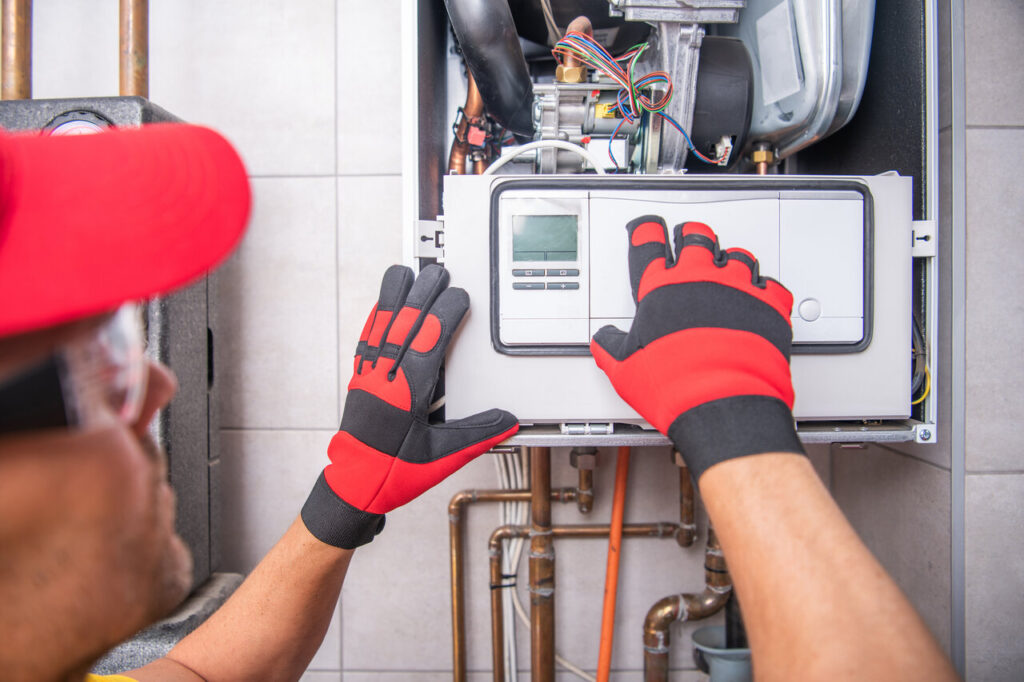
Think of your annual furnace tune-up as a “check-up” for your home’s most essential appliance. A certified technician will:
Clean all internal components.
Check the heat exchanger for dangerous cracks.
Inspect electrical connections for fire hazards.
Calibrate the gas pressure and burner settings for efficiency.
Catching a loose belt or a dirty flame sensor in October can prevent a total system shutdown in January.
3. Clear the Area Around Your Furnace
Your furnace needs space to breathe! Keep the immediate area (at least 2 feet in all directions) clear of laundry, stored boxes, chemicals, and anything else that could be a fire hazard or block the airflow it needs to operate safely.
Don’t wait until you’re huddled in a blanket at 3:00 a.m. wondering where the screaming noise is coming from. Stay warm, stay safe, and schedule your preventive maintenance today!